Encyclopedia
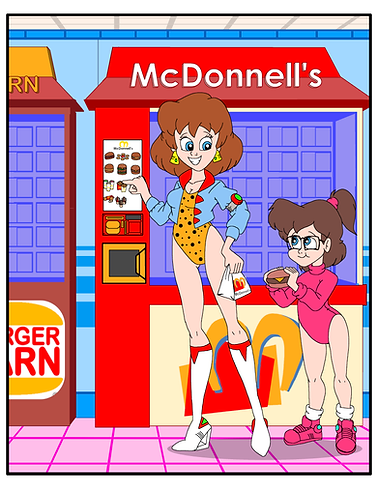
The Donoverse is an Science Fiction Picture Book Series about everyday life in an alternate Retro-futuristic twenty first century (inspired by 1980s Sci-Fi Movies and Anime); as seen through the eyes of young girls from Fourteen young families.
This Encyclopedia Page is for any additional "need to know" information about the World of the Donoverse; namely Characters and Worldbuilding.
Main Characters
The Donoverse focuses on Fourteen young families living in Columbia; with young adult parents and their young elementary school aged children. All of the main characters belong to a stable and loving Christian family.


The Families of The Donoverse also own a family automobile (one of three different vehicle models) they use for outings and trips
7 Passenger vehicle
SUV (Electric Vehicle)
5 Passenger Vehicle
General Automotive
Heavy All Terrain Recreational Vehicle (HATRV):
Motorhome (Liquid Hydrogen Gas Turbine Engine)
Model A: Half Track
Model B: Ten Wheeler
5 Passenger Cab
Columbia

The Main Setting for The Donoverse is Columbia.
Columbia is a US state on an island in the Northern Pacific. It is located about 2.5 hours north of Hawaii by plane, and 5 hours west of Northern California by Plane. The Island itself is roughly the same size as Taiwan, and has a similar population size.
History

Columbia when it was first discovered in the 1940s
Columbia was first Discovered by stranded US Navy pilots in 1942. According to early anthropologists, The Island was never inhabited by any prior human civilization. The Island was quickly claimed by the US Navy in 1943, but never saw any major battles. After the war, the Island was turned over to a US Civilian government in 1947.
As soon as the first civilian settlers began to arrive on the island, Columbia began to rapidly developed in a manner akin to its East Asian counterparts (e.g. Japan, Korea, Hong Kong, etc.). Hamlets became big cities, paved airports were being built, and even industrial centers were popping up; due largely to the free market economy on the island unhampered by the Keynesian economics on the mainland. Columbia was made into an Organized US Territory in 1954, with firstborn residents receiving full US Citizenship. With that said, Columbia retained a free market economy (immune from most federal over-regulation) for most of it's territorial history. The 1950s and 1960s would see Columbia turn into an economic powerhouse, while geography & territorial status would leave it largely unaffected by the Vietnam war & social upheaval of the sixties.
Columbia, However, would be affected by the 1973 oil crisis. This led to two major paradigm shifts in the state. The first was a turning away from fifties-era suburban developments into high density condominium housing (heavily influenced by the "Danchi" apartments of Japan); marking the beginning of Columbia's transition from a land of urban sprawls to skyscraper magacities. This was complimented by the two Nuclear Power Plants (Bowling Point in 1973 and Tomahawk Canyon in 1977) entering into service. In Addition, following the Vietnam War, Columbia's territorial government pioneered a jobs program for returning Veterans; who would be put to work on construction jobs for Columbia's infrastructure projects
In 1977, Calls for statehood began when policies of the Carter administration began to negatively affect Columbia. These calls fell on deaf ears until 1981, when President Ronald Reagan began advocating for Columbia's Statehood. On Columbus Day 1984, Columbia became America's 51st State. The following month Columbia's new Electorate would vote overwhelmingly for Reagan in the presidential election.

Columbia as it was in the early 1980s
The years between 1981 to 1999 are seen as the Golden Age of Columbia. Factors behind this Economic boom included the ongoing Reagan-era Economic boom at home, a bonanzo of new investments from Japan during the "Bubble Era", and the opening up of Eastern European markets later in the 90s. It It was during this time that the First American Center, the tallest building in Columbia was built. Breaking ground in 1982 and completed in 1986, First American Center ended up beating out the Sears Tower as the tallest building in the world; keeping the title until being beaten out by Australia's Gold Coast Tower in 2009. Also completed in this time period was Columbia International Airport in 1983; which was renamed to Ronald Reagan International Airport in 2005 in honor of the president after his passing
In the Early 21st Century, Columbia began implementing a Urban Renewal Program to combat its long standing urban sprawls. This meant gradually buying up suburban properties and replacing them with either parks or high density residential zones. By the mid 2020s, the project was completed ahead of schedule. Most of the remaining suburban homes have since been either converted (e.g. tea houses or restaurants) or remain owned by elderly proprietors
Geography & Ecosystem

Columbia has a Temperate Climate similar to that of the Pacific Northwest, albeit not as rainy or cold. Daylight Savings Time is not observed in Columbia so summertime daylight hours are mild (i.e. full darkness by 8:30 PM in June). However, In winter, Daylight hours are much sooner (i.e. full darkness by 5:50 PM in December).
Most of Columbia's ecosystems are Temperate forests; brodleaf, coniferous, and temperate rainforests. The only major exceptions are the Inland plains, which are made up of temperate grasslands and arid chaparral. Columbia's Highest elevation is the summit of Mount Rainford, standing 14,800 ft above sea level.
Columbia's Fauna is similar to that of North America's. These include woodland mammals like raccoons, Squirrels, Otters, skunks, possums, and hedgehogs; Birds like Eagles, Hawks, Sparrows, and Owls; Fish like salmon and Talapia, and reptiles like turtles & Frogs. Columbia, however, lacks predatory animals like wolves or Mountain Lions. That Said, Columbia does have native species of Coyotes and Bobcats, though both are more docile than their Mainland counterparts. Columbia also has a native species of Brown Bear, which are also significantly less aggressive than on the Mainland and mainly feed on Plants and fish. Columbia also has a native species of small monkeys, and is the only place in the northern hemisphere with native species of wallabies and Tuataras.
Cities & Urban Areas

Columbia’s urban landscape is often compared to Japan, South Korea, or Hong Kong rather than the mainland United States. Its major population centers are concentrated along the coasts, where tall, compact skylines have grown upward instead of outward. Cities are designed for density, efficiency, and everyday convenience; creating a metropolitan environment that feels carefully planned, highly organized, and still comfortable to live in.
Most residents spend their daily lives in large mixed-use complexes that combine housing, retail, transit, and public amenities in a single integrated setting. These complexes often include residential towers with office space, shopping malls on the lower floors, grocery stores, restaurants, entertainment venues, libraries, museums, parking structures, and transit access such as bus terminals, metro stations, and, in some cases, passenger heliports. Some are modest suburban centers, while others function as full downtown districts, and a few still retain old trolley lines preserved from earlier eras.
Surrounding these districts are broad greenbelts that function as both open space and major public parks. Within them are wide lawns, lakes, small forests, playgrounds, sports fields, picnic areas, and walkways for pedestrians and cyclists. In many neighborhoods, older single-family homes were grandfathered in during later urban renewal efforts and have since been adapted into tea houses, cafés, or other local businesses. The result is a cityscape that balances high-density living with generous green space and a strong sense of public life.
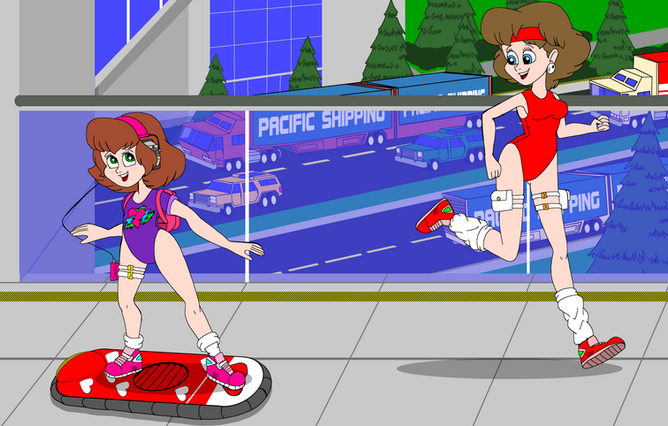
Freeways cut across the greenbelts and form the backbone of Columbia’s road network, but they are built to work alongside pedestrian and transit systems rather than dominate them. People usually cross by overpasses or tunnels, and freeway access points connect directly to parking garages and bus stations. Although most families own cars, public transit remains the preferred way to travel within the cities because it is faster, more efficient, and more closely tied to how Columbia’s urban areas are planned.
Columbia includes seven major cities, each with a distinct role in the state’s identity. Columbia City is the largest and serves as the cultural center, Newport City is the second largest and is known as the Bay City or Maritime City, Daytona City is the island’s main tourist destination (often referred to as the "Waikiki" of Columbia), Greenville is the northernmost city (often referred to as the "Sapporo" of Columbia) Fairview is the smallest coastal city, Springdale is the largest inland city, and Middleton is both the state capital and the smallest major city (often referred to as the "Salt Lake City" of Columbia) .
Economy

Columbia’s economy is best understood as a deliberate hybrid system—neither a full European-style social market economy nor a purely mainland American model of free‑market capitalism. Instead, it blends competitive private enterprise with strong public coordination and social expectations around stability, affordability, and long-term planning. Businesses are generally free to innovate and compete, but the government plays an active role in guiding development, protecting key industries, and maintaining broad access to essentials like housing, infrastructure, healthcare, and education. The result feels closer to Japan’s postwar economic approach: a market economy with significant institutional steering, where growth is encouraged, but so is social cohesion and the idea that prosperity should be widely shared rather than concentrated at the extremes.
The bulk of Columbia’s economy is made up of commercial services and offices; followed by manufacturing (heavy equipment, Computer Technology, and consumer goods), Agriculture (Fruits, Dairy, Eggs, Vegetables, and seafood), and even Entertainment (namely 2D Traditional Animation & Music) and Tourism.
Columbia is widely described as a “middle-class society”; not because incomes are equal, but because its institutions keep most households within a shared band of comfort, where steady wages support housing, transportation, healthcare, and education, and social status is tied more to reliability and contribution than conspicuous wealth—creating a sense that most people are living comparable lives with fewer extremes of poverty or excess. At the top sits an upper middle class of successful professionals, business owners, and senior officials who are affluent yet still integrated into everyday society, expressing their advantages through stability, quality of life, and civic influence rather than detached opulence. The largest and most culturally defining group is the core middle class—white-collar workers and small business owners whose steady incomes, family focus, and emphasis on responsibility and gradual progress set the tone for society. Below them, a lower middle class of blue-collar workers and tradespeople remains economically engaged but more vulnerable to fluctuations, balancing pride in skilled labor with tighter margins, and representing both the foundation of the island’s infrastructure and the group most sensitive to shifts in economic stability, with upward mobility possible when conditions remain favorable.
Family Life

Columbia’s culture has long been deeply family-oriented, shaping both social expectations and everyday life across the island. Marriage and parenthood tend to begin at a relatively young age, often in the late teens to early twenties, reflecting a cultural emphasis on building stable families early in adulthood. Within this structure, traditional roles remain common: women frequently choose to stay at home or work part-time in flexible, “family-friendly” occupations that allow them to remain closely involved in raising their children, while men typically serve as the primary breadwinners. Career decisions are often guided less by the pursuit of maximum income and more by the desire to preserve time for family life, with parents prioritizing shared experiences—whether at home, on outings, or during vacations—over professional advancement alone. This strong, stable, and affectionate family dynamic contributes significantly to Columbia’s exceptionally high quality of life and overall life satisfaction, which ranks among the highest in the United States. As a result, Columbia’s broader culture—including its business practices and entertainment industries—is oriented toward appealing to families as a whole, rather than targeting children or adults as separate demographics.
Travel
Because of the general prosperity of the Columbian economy, Families have disposable income to spend on things like travel and vacations.
Roy Ambluth World

The favorite go-to Destination for Columbia's families is Roy Ambluth World
Roy Ambluth World is one of the most beloved theme parks in Orlando. Opened in 1982, the Original park concept was built around a sleek “World of Tomorrow” vision that blends optimism, innovation, and everyday life into a cohesive experience. At its core, the park presents the future not as something distant or abstract, but as an extension of familiar American ideals. Attractions immerse guests in visions of space travel, smart communities, and evolving communication, all presented with a polished, hopeful tone. Rather than overwhelming visitors with spectacle alone, the park emphasizes a sense of possibility and progress, making it especially appealing to families who value both entertainment and inspiration.
Beyond its futuristic centerpiece, the park expands into a collection of richly themed lands that celebrate different facets of American identity and imagination. American Port captures the elegance of coastal cities with bustling waterfronts, historic-style storefronts, and refined dining along scenic harbors. Fairy Tale Kingdom offers a warm, storybook setting with alpine-style villages, castle courtyards, and a softer, more intimate fantasy atmosphere. American Wilderness brings guests into a rugged landscape of forests, rivers, and canyon vistas, where adventure rides and scenic experiences highlight the spirit of exploration. Toontown Studios shifts the tone entirely, presenting a vibrant, cartoon-driven world layered with a playful “behind-the-scenes” film studio setting, where exaggerated architecture and interactive attractions blur the line between fiction and production.
Together, these lands make Roy Ambluth World a go-to destination for Columbian families, valued not just for its attractions but for the way it reflects their shared love of family outings, nostalgia, and imaginative escape.
Also Located on Property is the Roy Ambluth Hotel and Roy Ambluth Animation Studios Florida. the Roy Ambluth Hotel functions as an All inclusive hotel resort for families visiting the park, especially those planning on staying for more than one day. This resort also includes a shopping district, two pools, and a Monorail that connects guests to the park. Roy Ambluth Animation Studios Florida is not officially part of the park but is the Main [Animation] Studio for the Roy Ambluth company, having been so since the company left California in the early 2000s. The Studio does offer tours to Guests and art school students though
Neojuku
In addition to the Main Park in Orlando; a second park, Tokyo Ambluth World, was built in Japan and opened in 2001. This Park is located in Neojuku, the second favorite go-to Destination for Columbia's families
Neojuku is an artificial island city in Tokyo Bay, constructed during the latter years of the Japanese Bubble Economy. Conceived as a monumental expression of Japan's postwar economic prosperity and technological confidence, Neojuku was promoted as a showcase of the pinnacle of Japanese culture, architecture, infrastructure, and economic might. Although administratively part of Tokyo, the island is commonly regarded as a city in its own right, functioning as a condensed representation of a typical Japanese city while incorporating elements associated with the greater Tokyo metropolitan area. Neojuku is also a major destination for tourism centered around Shōwa-era nostalgia, retro Japanese culture, manga, and anime; with its architecture and commercial districts deliberately recreating the visual character of late-20th-century Japan.
The centerpiece of Neojuku's skyline is the 2,750-foot Millennium Tower, located in the island's harbor. The tower is the tallest building in the world and the second-tallest structure overall, surpassed only by the Kansas Tower in Kansas City.
Love Airlines

Love Airlines was established in 1983 by Jeffrey Love, a former Vietnam war Veteran (who served as a Phantom II navigator during Operation Bolo) and airline pilot. It is Columbia’s de-facto Main airline as all of Love Airline’s Hubs are in Columbia’s seven international Airports. It operates a fleet of all widebodied airliners with a single class configuration. Love Airlines also offers amenities such as spacious economy seating, free meals and refreshments, free baggage, and free entertainment on every flight. As the Go-To Airline of Columbia, its long range widebody planes connect the island to the rest of the world; North America, Hawaii, the Asia Pacific, and even Europe and Israel.

Love Airline Flight Stewardess Uniform
Airliner Fleet
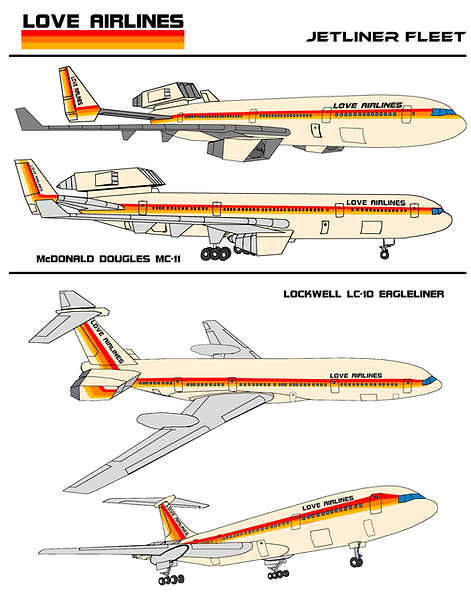
Love Airlines Fleet is made up entirely of wide-bodied Aircraft. These aircraft are powered by Liquid Hydrogen Fueled Jet Engines that increase the range of the aircraft while producing no toxic emissions. Love Airlines usually flies directly for all scheduled flights, though some charter flights make stopovers at Tokyo-Narita, Honolulu, JFK, Orlando, Gander, and Berlin-Tegel
McDonald Dougles MC-11
-
Passenger Capacity: 400
-
Range: 8,480 mi (13,649 km)
-
Engines: 3 General Aerospace HF39 Hydrogen Turbofans
-
Seating Arrangement: 2-5-2
Lockwell LC-10 Eagleliner
-
Passenger Capacity: 350
-
Range: 9,845 mi (15,843 km)
-
Engines: 4 General Aerospace HF6 Hydrogen Turbofans
-
Seating Arrangement: 3-4-3
In addition to a below deck galley, the LC-10 has a built in air stairs mechanism for airports where jetways are unavailable (such as Kona & Pago Pago).
Love Airlines's legacy Fleet includes the L-1011, DC-10-30, A300-600, and 767-300ER. Love Airlines also operated narrow bodied aircraft, like the DC-8 and later 757-200.
Other
Leotards
In the world of The Donoverse, Leotards a have become commonplace as regular clothing for women and girls. This trend started in the 1990s (with women and girls wearing swimsuits or activewear clothing to public places after going to the pool, beach, or gym) and expanded well into the 21st Century. With that said, most people do not find such clothing choices to be "immodest" or "Provocative" in the world of The Donoverse. Skirts and dresses are also still commonly worn, though they are shorter than previous years.