
The Death of “Mainstream” (And Other Updates)


Intro
I know I say “this is going to be my last blog post article” every other blog article, the same way Hayao Miyazaki says “This will be my Last movie” every other new movie.
That said, I am getting tired of having to come up with reasons to keep this blog active, other than preserving my existing articles, and I’ll admit that writing on cultural topics has been taking time and energy away that I would rather spend on my Artwork and series. I just wanted to use this article as a transition to a new business model. I initially also kept this blog as a surrogate for social media, but I feel like my days of social media, especially in light of all the algorithmic slop, is quickly dying. I hope to have my Instagram account deleted within the coming year, depending on how well I do in future Craft Fairs and Comic Conventions without it.
I will be taking a trip to Japan at the end of the month and I will be there for the first week of November. I have some new announcements for new projects I intend to start after the main article in this post, so be sure to stick around for that.
In the meantime, lets begin shall we?
Main Article
Even as a conservative, I don't listen to conservative commentators nearly as much as I used to. The problem isn't necessarily that I disagree with everything they say. It's that so much modern conservative commentary seems to consist of identifying a problem, explaining how terrible it is, and then stopping there. There is often very little discussion of what ordinary people can actually do about it. If I wanted nothing but pessimism about America and its culture, I could get that almost anywhere.
Personally, I'd rather rewatch an old Ronald Reagan speech. Whatever one's politics, at least Reagan genuinely tried to make people feel like the future was something worth building. Reagan was much more interested in presenting an optimistic vision of what America could become than in simply telling people that everything was doomed.
Unfortunately, while doing research for this article, I made the mistake of watching Matt Walsh's This Is the Exact Moment When Pop Culture Died for ideas. I initially found the video genuinely shocking. His argument about the decline of shared popular culture, the rise of artificial intelligence, and the possibility that society is losing the common cultural sphere that once connected everyone sounded frightening at first. But after thinking about it for a few hours, I came to a very different conclusion.
Walsh is right about one thing: the old mainstream is dying. What I disagree with is the assumption that this is necessarily a cultural catastrophe.
In fact, I think much of Walsh's panic surrounding the death of monoculture comes from nostalgia for a system that was never as universally satisfying as its defenders remember. The decline of monoculture isn't necessarily the death of culture itself. It may simply be the end of one particular way of producing and distributing culture.
And personally, I think that could be a good thing.
First off, Unlike Matt Walsh, I don't necessarily consider 2007 or 2008 to have been the absolute peak of American culture. Personally, I would probably place the cultural peak somewhere around the 1980s, 1990s, and possibly the very early 2000s. In my view, however, the decline really started around the mid-2000s.
I use Disney's Cinematic Catastrophe Chicken Little as the starting point for this—not because one awful animated movie somehow destroyed Hollywood, but because it represents a larger shift in the entertainment industry that became increasingly obvious afterward.
There's an important irony here, however.
I wasn't even born until 1997.
When the 1990s ended, I was still a toddler. During the early 2000s, I was in kindergarten and elementary school. I also grew up in Hawaii rather than on the American mainland.
As a result, I never experienced American monoculture in quite the same way that people who grew up during its supposed "golden age" did. If anything, I often felt alienated from it.
Instead, some of my fondest childhood memories came from home video. VHS tapes and DVDs allowed me to watch movies and television programs from the 1980s and 1990s long after their original cultural moment had passed. Eventually, YouTube expanded that experience even further. I could find obscure movies, television shows, cartoons, commercials, and other pieces of pop culture that I never would otherwise
In other words, I discovered culture after the gatekeepers had stopped deciding what I was allowed to see.
I should also disclose that Hawaii, despite being a US State, has its own unique local culture. Yes, we always had pop culture from the mainland here, but we also had our own unique culture of music (especially music in the Hawaiian language), Television, local chain stores and restaurants, food staples, and our own multiethnic culture influenced by the most racially diverse population in the US. We also had a lot of Japanese pop cultural influence in Hawaii even before it reached the mainland (such as Don Quijote, bookoff, Kikaida, and Candy candy), as well as a sizable Filipino pop cultural scene here.
This is why I find some nostalgia for monoculture difficult to relate to. When people talk about the loss of a shared cultural sphere, I sometimes think: What shared cultural sphere? Especially when someone brings up the 2000s. Even during the years when Hollywood was supposedly at its cultural peak, according to Walsh, there were plenty of people whose interests weren't represented by whatever happened to be popular at the time.
Ironically, what Matt Walsh considers some of the final years of a healthy monoculture—roughly 2007 and 2008—are remembered very differently by me.
He might remember movies like Ratatouille, Tropic Thunder and Idiocracy as examples of the creativity that still existed during that period. I remember Michael Bay’s widely despised Transformers, the awful live-action Alvin and the Chipmunks movie, the cinematic crimes against humanity that was Bee Movie and Shrek the Third, and a pair of very mediocre Disney films in Meet the Robinsons and Bolt.
To me, those years weren't the last golden age before the collapse. They were evidence that the collapse was already happening
And that difference illustrates something important: there was never one universal experience of pop culture.
So why is mainstream culture collapsing? I see six major reasons.
The first is that the Internet Exposes Everything—and Makes Alternatives Easier

The internet has fundamentally changed the relationship between audiences and entertainment companies.
Before the internet, Hollywood had enormous control over what people knew about movies and television. If a major studio wanted to promote something, it had television advertising, newspapers, magazines, billboards, theaters, and a relatively small number of television networks at its disposal. If something went wrong, the audience might not know about it.
Today, that's almost impossible. The internet exposes controversies almost immediately. Audiences can compare interviews, trailers, reviews, production decisions, box-office results, and behind-the-scenes information within minutes. Hollywood can no longer assume that its marketing campaign will be the audience's primary source of information.
There is no better example of this than Disney’s Snow White… the Live action remake from 2025. Because of how fast information travels on the internet; Snow White ended up mired in controversy and backlash; especially over the incendiary and deliberately provocative remarks by lead actress Rachel Zegler. As a result, the film reached the milestone as the first Disney remake to truly bomb at the box office.
Even when A movie tries to play off of the bad publicity it only serves to add gasoline and incendiary explosives to an existing inferno. For Example; 2026’s Animal Farm adjusted its marketing strategy to exploit the bad publicity it was getting from bastardizing the story as well, only for the movie to still be a box office bomb.
The old system depended heavily on controlling the flow of information. The internet makes that increasingly difficult. But the internet doesn't merely expose Hollywood's weaknesses…It gives audiences somewhere else to go.
That may be even more important. A person who dislikes a Hollywood movie or mainstream culture doesn't have to simply wait for the next Hollywood movie or fleeting trend. You can find independent animators, filmmakers, musicians, artists, writers, comic creators, educators, historians, and hobbyists producing material for audiences that might be far too small for traditional television or theatrical distribution.
That is not to say the internet is perfect. But for every piece of current internet "slop"—whether it is endless reaction content, algorithmically generated AI videos, influencer material, or the unholy beast that is Cocomelon —there are still countless independent creators making things they genuinely care about. For example; Andreas Deja's Cinematic masterpiece Mushka could only have been made in the present day as opposed to the mid to late 2000s.

The same principle applies to older entertainment.
A Show from the 1980s that disappeared from television isn't necessarily dead anymore. A forgotten television special can be rediscovered through online communities. They can discover an obscure anime series from forty or fifty years ago. They can buy an out-of-print book. They can discover foreign animation. They can watch fan-made productions. I personally would not have discovered obsure animated gems like Disney's The Fluppy Dogs or The Body Electric had it not been for the internet.

The same applies to physical goods. Online marketplaces make it possible to find obscure toys, books, collectibles, DVDs, VHS tapes, records, magazines, and other forms of media and merchandise that would have been practically impossible to locate in a traditional retail environment.
There is, of course, a downside. Online shopping and streaming have hurt traditional malls, theaters, retailers, and other institutions that depended upon physical foot traffic. But I don't think technology deserves all the blame. Many of these institutions have also made themselves less appealing. Walk into some modern commercial spaces and you'll encounter the same minimalist architecture, gray interiors, bland branding, and sterile atmosphere that seem designed to make every location feel interchangeable. If you want people to visit a physical place, perhaps making it feel like a hospital isn't the best strategy. Their subpar present day consumer products are no better either.

Nevertheless, the larger point remains: The internet has broken Hollywood's monopoly on attention.
So those are things Hollywood cant control. Now we get to the five elements Hollywood has full control over.
The second problem for mainstream entertainment is that Nothing Is Allowed to Fail
There was a time when studios could make bizarre, cheap, ridiculous movies and simply accept that some of them would be terrible.
That environment produced an enormous amount of strange entertainment.

Think about movies such as The Room, Garbage Pail Kids, Cherry 2000, Warriors of the Lost World (and its real star, the Megaweapon), Galaxy of Terror (complete with a worm sex scene), countless exploitation movies from the seventies, and low budget movies later immortalized by Mystery Science Theater 3000.
The important thing is that these movies were allowed to exist. And that freedom to fail mattered. That same ecosystem that produced bad movies could also produce genuine classics. Hollywood once took chances on strange projects—and sometimes those chances produced Rocky, Star Wars, Indiana Jones, E.T., The Terminator, Titanic, and countless
other cultural touchstones.

Today, however, Hollywood increasingly behaves as though every major production must be a guaranteed success. But If every movie has to be a guaranteed commercial success, studios become terrified of taking risks. If you remove the possibility of failure, you also remove the possibility of discovering something completely unexpected… and then everything becomes bland.
That has been particularly damaging to animation.
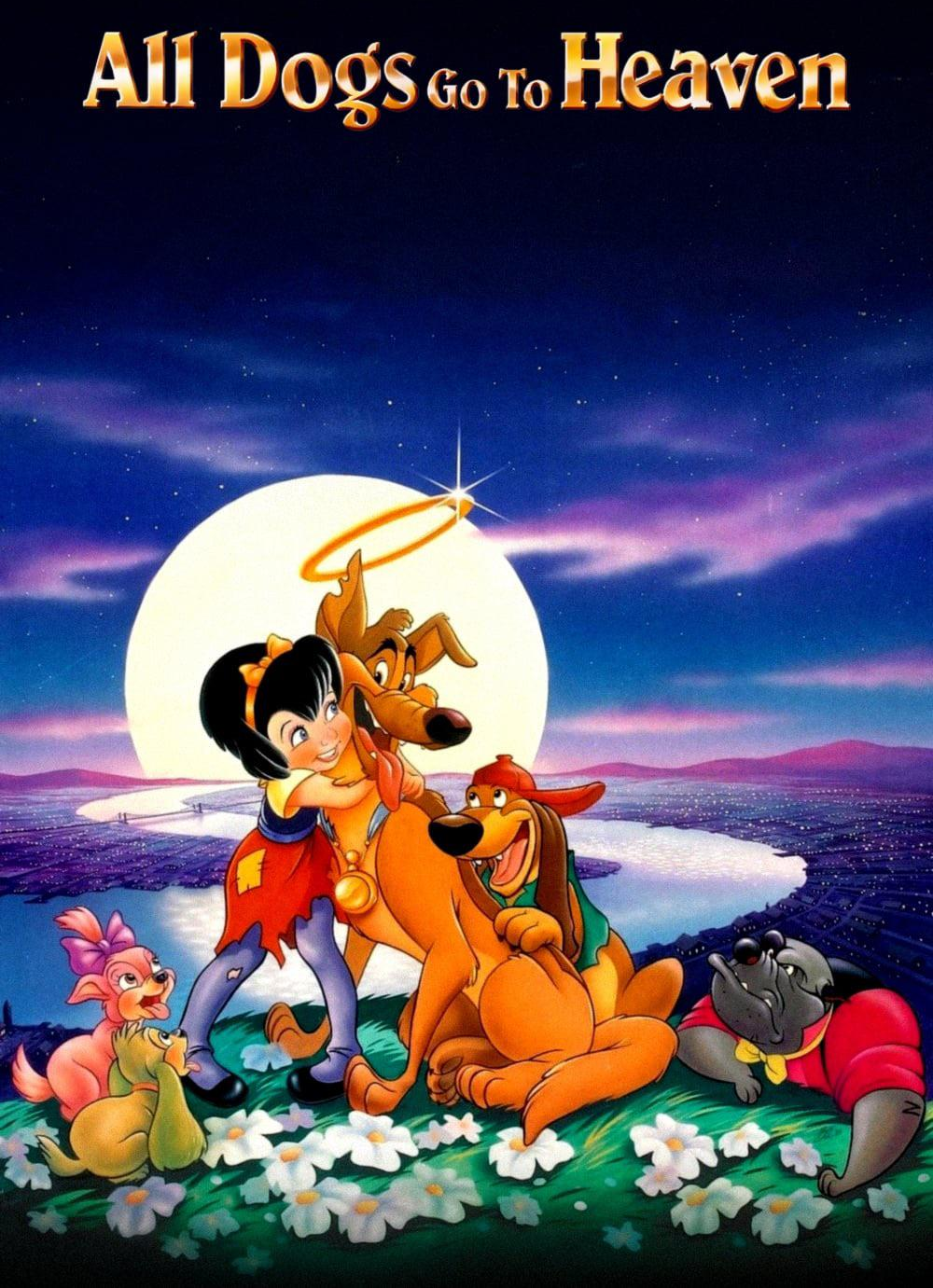
Animation has historically been an expensive and risky medium, and theatrical animation has often had a complicated relationship with profitability. A film could fail theatrically and still find a second life through home video, television, merchandising, or international distribution. Don Bluth's films, for example, were much more protitable on home video than in theatres.
However, following the enormous success of Shrek, the animation industry increasingly converged around a relatively narrow model of what a successful animated movie was supposed to look like. We’ll get into the catastrophic results of that later.
The irony here is that Hollywood can produce movies that make hundreds of millions of dollars while leaving surprisingly little cultural residue. A movie can become a financial success, dominate the box office for several weeks, and then seemingly vanish from the public consciousness. Meanwhile, some ridiculous B-movie from decades ago can remain memorable precisely because it was so strange.
If nothing is allowed to genuinely fail, nothing is allowed to genuinely succeed.
This leads me to my next point: Hollywood Has Essentially Run Out of Ideas

This is probably the most obvious complaint about modern Hollywood. Movies aren't the only victims of this. Almost every cultural aspect from music to toys to fast food chains and even airlines suffer from this inherent lack of creativity on a mainstream scale for the sake of “Profitability”. But for argument sake… lets focus on film and tv
Look at the biggest theatrical releases and you'll frequently find sequels, remakes, reboots, legacy sequels, adaptations, superhero properties, established franchises, cinematic universes, and nostalgia-driven projects. Instead of asking "What new cultural touchstone can we create?" the industry increasingly asks "What existing property can we bring back?"
There is an obvious economic reason for this; An established intellectual property comes with built-in recognition.
But there's a fundamental problem; Characters and actors are not immortal…Especially in live action. Actors age out, Actors retire, Actors die… Even if audiences love a particular character, the original performer cannot play that character forever. Hollywood therefore has to constantly confront the problem of succession… and the answer is almost always creating something new.
Unfortunately, Hollywood increasingly seems reluctant to choose this option.
Instead, Hollywood’s answer to this fact of life is either substandard new characters/actors (e.g. Rey from Sequel trilogy Star Wars) or, more distastefully, resurrecting a likeness with CGI or AI (e.g. Egon from ghostbusters even long after Harold Ramis’s death). The result is almost always polarizing and self-destructive
Animation theoretically has an advantage because animated characters can remain the same age indefinitely. But even animation has limits. Voice actors age or die. Animators change. Writers change. Directors change. Studios change. Most importantly, the characters themselves can change. That also said, A long-running animated character has to maintain some consistency in personality and worldbuilding. If you change a character too much, audiences may no longer recognize them. If you change them too little, the character can eventually become nothing more than a collection of their own exaggerated traits—a phenomenon often described as flanderization.The longer a franchise survives, the harder the balancing act becomes. Garfield, The Simpsons, and SpongeBob SquarePants demonstrate just how difficult it can be to preserve a character's identity across decades.

Even Peanuts, one of the most durable properties in American culture, is not entirely immune from this. Charles Schulz retired from drawing the comic strip shortly before his death in 2000, and the franchise has since relied on licensing, merchandise, adaptations, and other forms of continuation.
The bottom line is You cannot manufacture cultural relevance forever. Eventually; Something has to stop. Hollywood's problem is that instead of accepting that reality and simply hitting the breaks on franchises, it increasingly tries to accelerate them.
Worse yet, they often try to appeal to a new type of [hypothetical] audience… leading to normal audiences to turn away from cultural touchstones in mass as a result.
Which brings me to my next point: Leftist Politics and Bias Have Become Too Prominent
There is an important point that political commentators such as Matt Walsh sometimes overlook: Hollywood has always had a political culture that generally leaned toward the American left. There have always been some creative exceptions of course, mostly in animation and family films, but the entertainment industry has historically contained a strong liberal and progressive current.
But even as a conservative myself, I don't automatically consider that fact disastrous.
Liberalism and progressivism can serve useful purposes when they prevent society from becoming excessively authoritarian, reactionary, or socially restrictive and hierarchical. In moderation, It prevents a modern culture from devolving into a theocratic neo-puritanical society (like the fictional Gilead or the real world Iran) or an exploitive Dickens-esque one (like the fictional world of cyberpunk 2077 or or the real world modern Russia and China). A culture needs room for disagreement and change.
Plus, God help us if we have to resort to Daily Wire or Pureflix for "entertainment".
The problem begins when audiences perceive entertainment as political messaging first and entertainment second.
This became especially noticeable during the Obama era and even more so through the rest of the 2010s and 2020s.
The deeper problem with this happens when a monoculture develops a relatively narrow ideological range.
The issue isn't simply that Hollywood is "left-wing." It's that a monoculture with a narrow ideological range can eventually alienate people outside that range. If nearly everyone producing mainstream entertainment shares Far-Left assumptions about politics, culture, gender, race, or society; people outside that worldview can begin to feel as though the entertainment industry isn't speaking to them. And once audiences feel that entertainment is lecturing them rather than entertaining them, the relationship begins to break down.

This is why modern “strong independent women” characters (e.g. Rey from the Sequel trilogy Star Wars) are widely despised, even by women… even by tomboyish women. The same goes for the race swapping of characters, especially redheads. I personally know even black people who hated the race swapping of Ariel in the live action remake… and I would feel the same way if they race swapped Tiana from princess and the frog even as a white guy myself.

And, as the ideology grows even more radicalized, so too does the number of people alienated by Hollywood. The most recent blunder of epic proportions Lesbian Space Princess is the poster child of this, so too are its villains the "straight white maleans". Naturally, It is being torn to shreds by everyone outside of leftist eleitists and the most radical factions of the “LGBTQ+WTF” Community. It should also be noted that such a film could only exist in a leftist echo chamber. Could you imagine if Dailywire made an anime movie called “Straight White Male Savior”? where the protagonist is a Straight White man sent back in time to prevent the extinction of the human race by impregnating as much women as possible? And the villans were "Feminist Lesbian Land Whales"? Likewise, to be fair, even in the thick of the Progressive 1970s, a left wing Hollywood in the past would have never considered “Lesbian space princess” a good idea... unless it was some parody comedy movie.
There is also another irony in Hollywood's relationship with capitalism: The industry is filled with some of America's wealthiest and most powerful people but portrays itself as the champion of the “common man” while routinely attacking capitalism…and then the common man (especially if they are white, straight, male, christian, coonservative, or [especially] all of the above).

There are three industries Hollywood especially loves to portray as villains; Nuclear power plants, Defense contractors, And Meatpacking companies. These industries have become recurring shorthand for corporate greed in movies and television. The sinister corporation is often a nuclear power company risking another Chernobyl by cutting corners to increase profits, a defense contractor profiting from war, or a meatpacking company killing off the animal protagonist’s mother so they can sell the animal for food…and make a profit.
In reality, however, Nuclear power is subject to extensive federal regulation and oversight. Defense contractors operate under government contracting rules, audits, procurement requirements, and congressional scrutiny. Meatpacking and food production are subject to extensive health and safety regulations and inspections.
Also, the same people in Hollywood who get upset about killing animals for meat are perfectly ok with murdering unborn children in the womb through Abortion... Just Saying.
Meanwhile; A studio isn't subject to nuclear-safety regulations because it doesn't operate a nuclear reactor. It isn't subject to food-safety inspections because it doesn't process meat. When something goes wrong in a movie, nobody gets fined because the third act was badly written.
But that doesn't mean its influence is insignificant.
Entertainment companies can influence what millions of people see, what stories get told, which celebrities become cultural icons, which ideas become fashionable, and which subjects receive attention.
And there is an amusing reversal here. Hollywood can portray any business executive villain as though they possess unlimited power while simultaneously operating in an industry that allows them unbridled access to the culture. The irony is so rich, you could make meat gravy out of it.
But heres the thing; If the dominant entertainment industry represents only one cultural worldview, especially an increasingly radical one, audiences who don't share that worldview have fewer alternatives within the mainstream. That problem becomes even more significant when the industry is simultaneously trying to maintain the appearance that its entertainment is universally representative. And to us conservatives in “Flyover” country, the response to Hollywood is almost always “Go F**k Yourselves”.
Of course radical far left politics is hardly the biggest way that Hollywood alienates its audience it claims to represent. There is actually a much bigger elephant in the room… and canary in the coal mine… and, in my opinion, one of the biggest artistic problems facing modern entertainment.
Everything Is CGI
I have long believed that the way a culture treats traditional animation is an interesting indicator of its broader creative health. Japan is an obvious counterexample. Its animation industry contains an enormous range of styles, techniques, studios, genres, and artistic traditions. But If the oversaturation of CGI “animation” is any indication, America and the west as a whole has already collapsed culturally. In my opinion, CGI “animation” may look culturally successful on paper, but is inherently creatively and artistically inferior to 2D "Hand-drawn" animation.
Hand-drawn animation could have its own character designs, layouts, animation styles, background painting, effects animation, color palettes, and visual language. As such, American animation once had a degree of variety similar to that of Anime, specifically in the 1980s and 1990s to the very early 2000s. That's because films weren't interchangeable even despite trends.

A Don Bluth film was a Don Bluth film because he had his own aesthetic. Same goes for Amblimation or FernGully or The Nutcracker Price or even early 2D DreamWorks. Even within Disney; movies like Oliver & Company, The Little Mermaid, or Beauty and The Beast could be stylistically distinct despite having the same animators or production staff or even studio values. Studios and filmmakers abroad, like Hungary’s Pannonia film studio, Britain’s Cosgrove Hall, or Yoram Gross from Australia had their own unique style as well. In the 1980s, you could tell whether a TV show was made by DIC, Marvel-Sunbow, Nelvana, Hanna Barbera, or any other studio just by the aesthetic and color pallette. Even within anime, nobody can confuse Studio Ghibli for Mobile Suit Gundam or Creamy Mami or Sailor Moon or Pokemon. And the same applies from time periods, from as far back as the 1920s to as recent as the early 2000s. The bottom line was that hand-drawn animation was visual storytelling at its peak, even if the story quality varied. That is why I would place the cultural peak of mainstream entertainment somewhere around the 1980s, 1990s, and possibly the very early 2000s.
Of course, Hand-drawn animation was not the only one however. Stop-motion also provided aesthetic variety. No one could ever mistake a Nick park stop motion for a Will Vinton one. Hell, Even some early computer animation, I’ll admit, had its own visual limitations that helped make animated productions feel distinct from one another. Think of Toy Story compared to Reboot or VeggieTales.

Then CGI became increasingly dominant.
By the 2010s, Hollywood animation increasingly seemed to revolve around churning out variations of the same highly polished computer-generated aesthetic like sausages; essentially obliterating itself creatively in the process. In short, Everything looks the same.
And the same problem exists in live action.
Older filmmaking relied upon practical sets, miniatures, matte paintings, location shooting, optical effects, practical costumes, makeup effects, physical props, and real actors interacting with real environments. These limitations could actually encourage creativity. If you couldn't digitally create absolutely anything, you had to ask "How can I achieve this effect with what I actually have?"
That question produced distinctive visual identities: the rubber-suit monsters of classic Godzilla movies, Ray Harryhausen's stop-motion creatures, the miniature work of the original Star Wars trilogy, the iconic cars of Back to the Future and Mad Max, and the practical environments of The Wizard of Oz.

Today, however, the distinction between techniques has become increasingly blurred. A live-action movie can contain enormous amounts of computer-generated imagery. A CGI “animated” movie can be designed to imitate live-action cinematography and traditionally animated aesthetic simultaneously. A completely computer-generated environment can be made to look physically real. Technically speaking, this is astonishing. Artistically, however, it is a visual nightmare.
Ironically, the more technically sophisticated Hollywood becomes, the more some of its productions can feel visually interchangeable. Same shots, same CGI animation, same special effects… all backed with the same mediocre plots. We spend hundreds of millions of dollars on every film to make them all look a dime a dozen

And now Hollywood is increasingly experimenting with artificial intelligence as well. If the industry, already struggling with visual sameness, replaces more human creative decisions with automated systems, it could potentially intensify the problem rather than solve it.
This leads me to my final problem
Hollywood Tries to Appeal to Everyone—and Ends Up Appealing to No One
This, to me, is the biggest problem. It is also the reason Matt Walsh's alarmism about the death of monoculture seems so backwards and laughable.
Hollywood increasingly operates in a global marketplace. In theory, this supposedly creates enormous opportunities. In practice, however, it creates pressure to make entertainment that can theoretically appeal to every demographic, every country, every age group, and every cultural market simultaneously.
And that's an impossible thing to accomplish.
The more people you try to appeal to, the more specific characteristics you may have to remove. A movie becomes less culturally specific, A character becomes less eccentric, A story becomes less controversial, A setting becomes more generic, A joke has to appeal to the lowest common denominator, A conflict becomes less complicated with less real stakes… Eventually, you can end up with something that is technically designed for everyone but emotionally belongs to nobody.
Globalization intensifies this problem because Hollywood isn't merely competing for American audiences anymore. Major productions are frequently designed with international markets in mind. This creates major problems.
The first is that it can encourage a kind of cultural lowest-common-denominator approach. This isn't because international audiences inherently want bland entertainment. Rather, a studio trying to avoid alienating any particular market may gradually remove the very cultural specificity that made the entertainment interesting in the first place.
The second is less known but possibly more dangerous: Hollywood becomes a cultural quisling to foreign nations, especially dictatorships that frequently violate basic human rights. Hollywood's relationship with China has been a particularly troubling example, especially when filmmakers or studios modify stories, characters, or settings in ways intended to accommodate Chinese market access. These problems magnify especially if Taiwan is involved or if China is initially depicted as an enemy in a film or TV Show.
The ultimate betrayal comes when an industry, supposedly dedicated to freedom of artistic expression, can become increasingly constrained by the commercial requirements of a foreign marketplace. And to America, a nation built on immigrants who fled foreign Tyranny, this cultural betrayal should be unacceptable
On the flipside, while Hollywood has increasingly alienated portions of its own domestic audience, American entertainment has spent decades expanding its influence across the rest of the world… often at the expense of their own local culture.

Again, animation is probably the biggest victim here. With virtually every western country adopting CGI as their default, most present day foreign animation feels like it could have been just as much produced in the US as abroad, even in countries that supposedly “hate” us. The 1981 soviet animated film The Mystery of the Third Planet looks uniquely soviet while the 2009 Russian animated series Masha and the Bear looks quite hyper-Americanized (and honestly uglier).
It's also the reason Anime fans like myself see red every time Japan (or Netflix) occasionally dabbles in CGI; we don't want our beloved anime to turn into hyper-americanized minions clones.
Of course, foreign countries aren’t the only cultural Victims
Hollywood’s worldview isn’t necessarily American, it's not necessarily even Californian, It is almost specifically Southern Californian. Basically it's less than 7% of the United States speaking for the nation as a whole. You can also tell this worldview by how Hollywood depicts the rest of its state + the other 49. Most media is either depicted in Southern california or southern California adjacent as the “normal” or “cultured “America, or in New york city,”. Chicago is almost always depicted as a suburb despite its iconic skyline. The south is depicted as intolerant trailer trash rednecks. Texas is depicted as goofy cowboys. Ohio is depicted as the state everyone wants to leave. Kansas city was only depicted once so it could be destroyed in a nuclear war.... which goes to show you what Hollywood thinks of Kansas City.

Even Hawaii is still depicted as a volcanic island where everyone lives in grass huts, dances hula, and plays the “eukalaylee" (fun fact: real hawaiians hate that pronunciation of the word “ukulele”); despite having more skyscrapers on Oahu alone than the vast majority of US cities. I find that irony especially amusing in an era of Hollywood claiming "diversity" and "multicultural viewpoints", almost as amusing as the look on a tourist's face when they find out just how densely populated Oahu is.

The point is... not simply that Hollywood misrepresents the South, Texas, Ohio, or Hawaii, It's that it mistakes its own regional perspective for America itself. The entertainment industry often treats its own regional experiences as universal and other Americans as deviations from the norm. And considering how culturally diverse the real american experience is, that feels incredibly condescending.
So where does all of this leave us? Ultimately, The Death of “Mainstream” culture in America.
Skydance's recent buyout of half of the [mainstream] entertainment industry, from Warner Bros to Paramount, may be seen as the straw that broke the camels back for hollywood... the beginning of the end of Monoculture for America.
Now let me be clear on what I think is happening: Hollywood isn't necessarily disappearing, but it is losing its monopoly on attention; even if slowly and painfully.
I think that distinction is extremely important. The entertainment industry can remain enormously profitable while simultaneously losing its status as the center of American culture, even despite the mergers and buyouts.
The old entertainment economy depended upon scarcity. There were relatively few television channels, There were relatively few major movie studios, There were relatively few ways to distribute entertainment, and there were relatively few places where audiences could discover alternatives. If a major studio released a movie, millions of people were likely to encounter it simply because there weren't that many other things competing for their attention. The internet destroyed that scarcity.
And while cultural purists such as Matt Walsh may regard this fragmentation as bleak, I think there is another way to look at it: The death of monoculture can also mean the death of cultural dependency. If Hollywood doesn't make something you like, you now have alternatives.
Better yet; If Hollywood doesn't make something you like and you can't find the kind of creator you want, you can potentially become that creator yourself.
That may be the most important point of all.
The old entertainment system required people to pass through a relatively small number of gates. The new system allows far more people to build their own little worlds. Some of those worlds will be tiny, Some will be enormous. Some will disappear after a few months, Some may last for decades. But they don't have to depend upon Hollywood.
That's why I call this the death of the mainstream.
It's not the death of movies, television, or animation. Maybe it could be the opposite. The new culture may only be in its infancy, but opportunities for new creators to make better movies or animation could be around the corner.
It's not even necessarily the death of the existing Hollywood establishment, though they’ll have to adjust in order to survive. This answer may be simply letting people watch the classic movies, television, or animation and calling it a day.
It is the death of the idea that one entertainment industry has to define what everybody watches.
The future of entertainment may not belong to one enormous industry producing something for everyone, It may belong to thousands of smaller industries producing something for someone. Perhaps that isn't the cultural apocalypse some people fear. Perhaps it's simply the end of an era.
The monoculture may be dying, but culture isn't. We're experiencing a transition from centralized mass culture toward a much more decentralized cultural ecosystem. That transition has real problems, but it also creates real opportunities that didn't exist under the old system—particularly for people who never felt represented by the old mainstream in the first place.
As for me, this is where the Donoverse, and my new series come in
Announcements
I firmly intend to expand my art career over the next year. I will focus on Hawaii, namely my home island of Oahu, as my Geographic market. That said, Hawaii is definitely no stranger to domestic and international tourists; so reaching a global audience outside of the internet should be no problem.
In addition to my Flagship Original Series The Donoverse; I intend to launch Three new secondary series.
The first is DauArts

DauArts — also known as the Donovan Dau Academy of Art — is a series of how-to-draw-cartoon books designed to teach readers how to draw, design, and creatively flourish in an increasingly independent and post-mainstream cartooning environment.
This series was actually the inspiration for the previous article. In it I mentioned the following:
If you can't find the kind of creator you want, you can potentially become that creator yourself.
Now many people would be tempted to look at the “Death of Monoculture” and fall into despair, especially with AI. I intend to answer that despair with DauArts by teaching the art skills needed to overcome, and even thrive in, the post-mainstream culture. I believe anyone can draw cartoons or tell stories, they just haven't developed the skills yet. DauArts will help teach those skills.
The second is Project CIRMEX

Project CIRMEX is a project one year in the making, now with a brand new identity
Project CIRMEX is a traditional-animation-centered fanzine celebrating television cartoons, animated movies, and anime from approximately the 1970s, 1980s, and 1990s. Each issue will focus on a different series, movie, or overarching theme
My purpose with Project CIRMEX is to both bring back fond memories to fans while introducing the classics to a new generation of viewers.
Finally, we have Showa Americana

Showa Americana is a Retro Nostalgia Art zine that explores and celebrates the aesthetics of postwar Japan and America, particularly in the 1950s, 1960s, 1970s, 1980s, and 1990s. The project emphasizes visual culture, architecture, transportation, consumer culture, illustration, and everyday life rather than simply treating either country as a stereotype or a backdrop.

I hope to have all these series, plus my own series The Donoverse, contribute to a new culture for america


